People outcomes
Absence, retention and recruitment tell you what is happening across your workforce.
The People KPI
Employee Happiness Score is a cultural barometer for your organisation. One consistent measure of how work feels, with the feedback behind it, gives HR and leaders a shared starting point for better decisions.
A fuller management picture
Absence, retention and recruitment tell you what is happening across your workforce.
Service, productivity and financial results show how the organisation is performing.
EHS asks people directly how working here feels and gives them room to explain why.
A leadership team can discuss the same score and still take away different stories. Participation, the spread of responses and the comments give that conversation substance.
EHS makes listening repeatable. Its value comes from how leaders read the evidence, decide what deserves attention and explain what happens next.
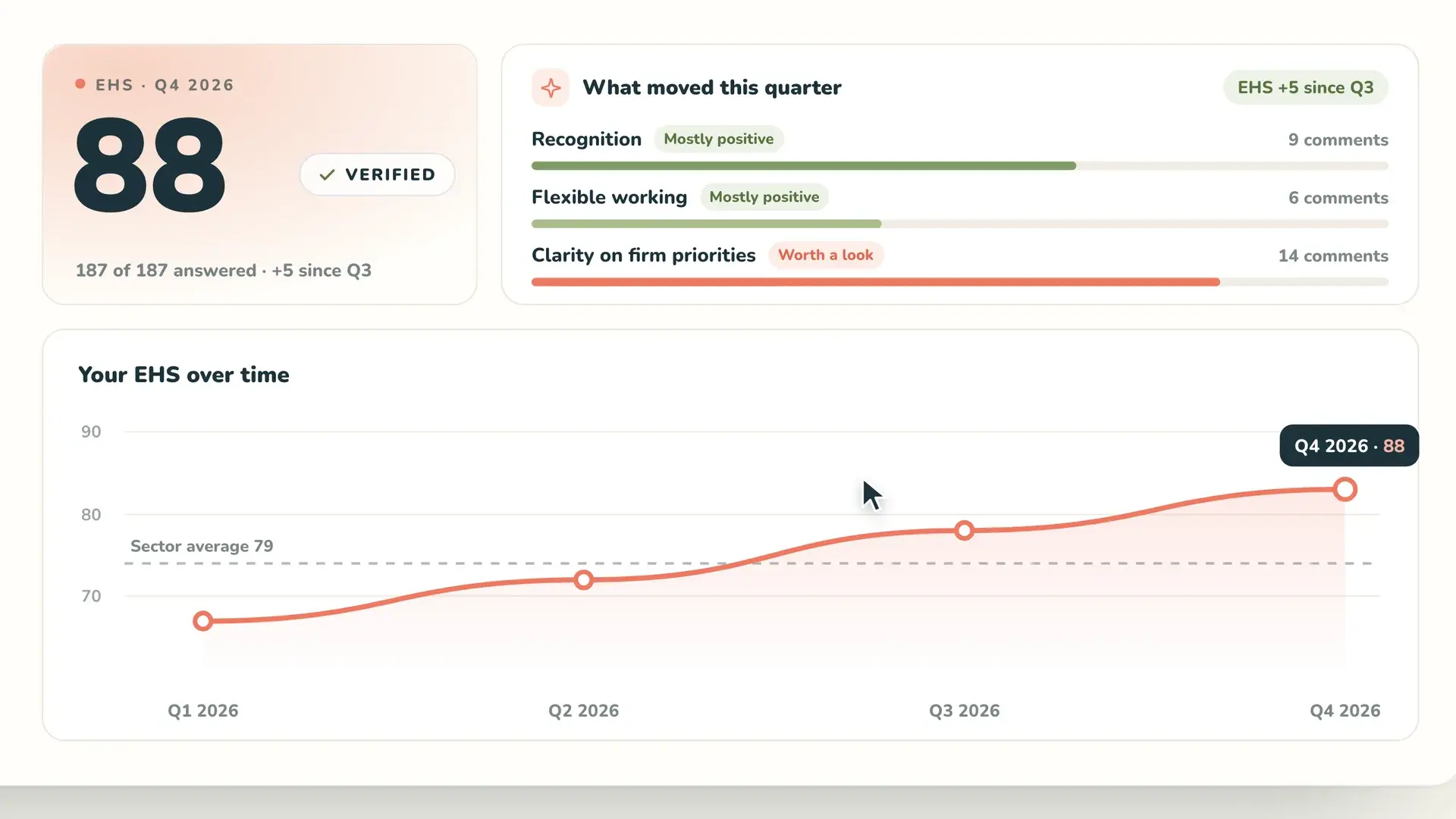
Product illustration. Figures and sector comparison shown are examples.
What the number represents
“How do you feel about working at [your company]?”
Employees choose one of five labelled faces and can explain their answer in their own words. A completed, verified Cycle produces an EHS score from 0 to 100.
The score is an index. A score of 72 means 72 points on the EHS scale, not that 72% of employees are happy. Explore the method.
A practical reporting standard
A useful board update names the Cycle period, the number invited, participation and the themes that deserve attention. It also records what the team has decided to do.
A single change does not establish a trend or explain its cause. Check who answered and what changed in the organisation before drawing a conclusion.
EHS is a better choice than eNPS for understanding how employees feel about work. It asks about their own experience directly. eNPS asks whether they would recommend their employer.
If eNPS is your headline measure of employee happiness, we recommend replacing it with EHS and establishing a separate baseline. Read the comparison.
From reporting to responsibility
Use the same question and method each Cycle. Record any change in the workforce or invitation approach.
Report participation, response patterns and feedback alongside the headline.
Agree who reviews the evidence, who makes decisions and when progress comes back.
Tell employees what you heard, what you are doing and what needs further exploration.
The benchmark ambition
Your own completed Cycles are the immediate basis for comparison. Keep the timing and audience as consistent as practical, then explore changes in context.
EHS is building towards wider industry comparison. Any sector benchmark needs a defined cohort, reporting period and participation rules before it can support a meaningful claim.
Read the number responsibly
EHS gives you a view of employee happiness. It does not capture every aspect of culture, diagnose an individual or predict who will resign.
Use it alongside operational evidence, conversations and any deeper research your organisation needs. See why the same average can hide different experiences.
Put it into practice
A practical starting point is a 30-day collection window each quarter. Allow time to review the result, communicate a response and follow up on a focused issue before the next Cycle.
Start with how EHS works, then use the guide to using EHS to plan ownership and follow-through.
See EHS in action
See the employee experience, the score and the feedback in a walkthrough with the EHS team.