Using EHS

Make listening part of how you lead.

A useful score starts a conversation. Give EHS a place in your leadership rhythm, read the feedback behind it and show employees what happens next.

01 / Prepare to respond

Give the process an owner.

Agree who prepares each Cycle, who reviews feedback and who can make decisions. Up to five EHS Champions have organisation-wide access, so their responsibilities should be clear.

Before launch, explain the purpose, the anonymous-by-default approach and when employees will hear back. Put the review meeting in the diary while the Cycle is being planned.
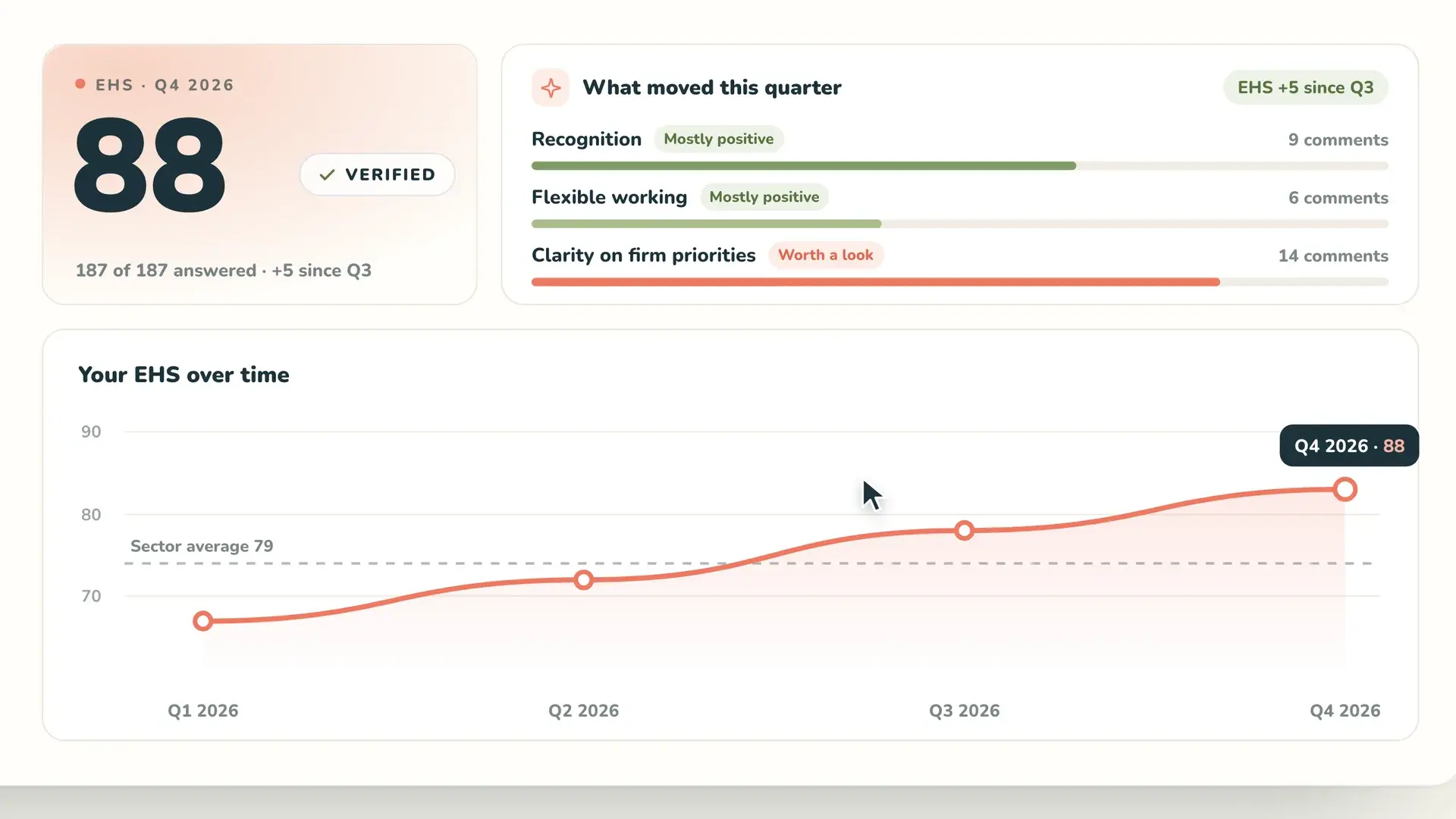
Illustrative EHS dashboard showing the score, trend and feedback views.

Product illustration. Figures and sector comparison shown are examples.

02 / Review the evidence

Read the score, then look behind it.

Start with the latest completed Cycle and its verification status. Compare it with previous completed Cycles, checking whether the audience, participation or business context changed.

Look at the spread of responses and the comments. A stable average can sit above very different experiences. Use Ask EHS to explore themes, then check the context in the feedback.

Four questions for the review

  1. What changed in the score and response pattern?
  2. Who answered, and who may be missing?
  3. What are people telling us in their own words?
  4. What decision does this evidence support?

03 / Decide and explain

Choose a response people can recognise.

Pick a focused action you can own and review. Record the issue, the decision, the person responsible and the date you will return to it.

Sometimes the right next step is to investigate. A focused Check-in or conversation can clarify a theme before you commit to a change.

Share a clear response: what you heard, what you will do, what you need to explore and when you will report back.

04 / Follow through

Leave room to act between Cycles.

A practical starting rhythm is a 30-day collection window each quarter. Use the time after release to review, communicate and follow through.

Check-ins can explore a specific issue between Cycles. Choose the questions and audience for that purpose, and explain whether responses are anonymous or named.

Return to the next completed EHS Cycle for the comparable headline measure. An improvement can guide further questions; it does not by itself prove that one action caused the change.

Explore the product steps, leadership responsibility and EHS Insights for more practical context.

A repeatable rhythm

Listen: run the EHS Cycle.

Review: read the score and feedback.

Respond: explain and own the next step.

Return: review progress and listen again.

Put EHS into practice

Build a rhythm that fits your organisation.

Talk through your workforce, your current reporting and how EHS could support the decisions you need to make.